A few days after Christmas last year, I made a half-day visit to Tuskegee, Alabama, home of the Campbell family. It sits on a sort of high ridge, between Montgomery and Auburn.
I took pictures of the large First Baptist Church on Main Street, built in the 1850s, where Ava Lucerne Campbell (Granny) got married in 1884 to David Graham Hill of Texas. I had planned to take the tour of The Oaks, Booker T. Washington's home, but the National Park Service had closed the house that day. I took pictures of the town square and Macon County courthouse; and I spent quite a while in the Tuskegee Cemetery photographing the graves of our ancestors and their relatives, which included Granny's parents, her paternal grandparents, and the Wright family. I didn't have time to visit the Tuskegee University campus, since I had a long drive ahead of me.
Early in January I visited our cousin Gloria in Louisiana. She has a painting which her father David Gatlin Hill (Uncle Dege) made, based upon memory, of the Campbells' home. Amazingly, the house in this photo caught my attention in Tuskegee, and its architecture is remarkably similar to the real Campbell home in the painting -- which reportedly burned down a long time ago.
Showing posts with label Campbell. Show all posts
21 October 2010
18 March 2010
Irish & other Celtic ancestors
For St. Patrick's Day, I thought I'd post a summary of ancestors we know of who emigrated from Ireland, Scotland, Wales, or Cornwall. When I went to double-check some of these "roots" last night, I found some information which was new to me about a couple of the families, so I'm a day late here! Although Haynie is said to be of English-Irish origin, our Haynie ancestors came to America from England, not Ireland.
The following are surnames coming from areas with persistent Celtic traditions. The Irish names actually represent Scotch-Irish (Scots-Irish) or English-Irish families, who had previously migrated to Ireland, probably during the Ulster Plantation.
See the Wikipedia article: Plantation of Ulster
Ireland:
Houston -- The mother of Lucindy Johnson Morgan (1827-1863) was Jennie or Virginia Houston, said to be a cousin of Sam Houston. Sam Houston's emigrant ancestor, according to a family tree in RootsWeb.Com, was John McClung Houston (1703-1754), who arrived in the colonies circa 1730. He is said to have been born in Antrim, Ulster, Northern Ireland. In earlier times, this surname was spelled differently, e.g. Houseson.
Johnson -- Jennie Houston, who was born in Virginia, married Patrick Johnson. Patrick Johnson was born in Ireland 1780, of English-Irish descent. Therefore, he emigrated after the U.S had become an independent nation. This couple had their children in Abbeville District, South Carolina, where they were neighbors to John C. Calhoun; then they moved to Talladega County, Alabama, and from Ala. they moved to Texas. This was in the late 1840s after Texas joined the Union; being relatives of Sam Houston may have had something to do with their decision to go there!
Johnson -- Elizabeth Frey (b. 1812), mother of Bascom Covington, was the daughter of Mary Johnson (Frey). Mary's father, according to online information, was Henry Johnson, who was born 1738 in Antrim, Northern Ireland. He married in Pennsylvania and then served in the Revolutionary War; so he had emigrated at quite a young age, perhaps as a child. This Johnson couple ended up in Robertson County, Tennessee...Family lore says that Elizabeth Frey's mother was related to Reconstruction-era President Andrew Johnson, but to date I've not been able to find data supporting this kinship.
[Patrick Johnson and Henry Johnson may have been related to each other, back in Ireland. Their descendants Ione Morgan and Bascom Covington, respectively, were joined in marriage in 1890, in Callahan County, Texas.]
Scotland:
Campbell -- George W. Campbell (1828-1905)'s grandfather was a Scotsman who lived in Mecklenburg County, North Carolina (vicinity of present-day Charlotte), and served in the Revolutionary War (1775-1783). As of yet, we know nothing else of this Campbell family's American beginnings; the descendants moved from N.C. to eastern Georgia and from Ga. to Macon County, Alabama.
Smith --The immigrant ancestor of both Anne W. Smith (d. 1871) & her husband-cousin Benjamin M. Smith (d. 1877), of North Carolina & then Arkansas, was Alexander Smith, a Scotsman who died 1696 in Virginia. Col. Samuel Smith, descendant of Alexander, was a Revolutionary War officer in N.C. Smith descendants also fought for the Confederacy during the Civil War (1861-65), although not in our direct ancestral line.
Wales:
Evans -- The maternal grandmother of H. A. "Gus" Tillett was Pamela Evans (Wyche), of Virginia and North Carolina. Pamela's father was William Evans, who was born circa 1756, moved to Va., and served as an officer in the Revolution. William's father was Lewis Evans, of the Welsh Quakers in southeastern Pennsylvania, Bucks & Chester Counties.
Evans -- Samuel Haynie's wife was Hannah Maria Evans (Haynie); I posted her obituary recently on this blog. Although she was born in upstate New York, her paternal ancestry, too, was of the Welsh Quaker Evanses of southeast Pa. In fact, their line of descent has been traced back to the 14th century & earlier. Her immigrant ancestor was Thomas Evans (1651-1738), who is said to have arrived in 1698, or when he was in his late 40s. Thomas's great-grandson Samuel B. Evans was an officer during the Revolution, and Samuel's son & grandsons participated in the Texas Revolution (1836), with one dying in the Alamo.
[Although Lewis Evans was very likely related to Thomas Evans' family, so far I haven't found a direct connection. Their respective descendants were united with our own parents' marriage in 1948.]
Morgan -- Our Morgan ancestors descended from Col. Haynes Morgan, head of the Colonial Virginia Militia for part of the Revolutionary War. His exact ancestry hasn't been traced, but he is said to have been born in Wales circa 1742 & there is at least a tentative link to Morgans in Pa., although Haynes Morgan lived in Virginia. Many of the Colonel's great-grandsons served in the Confederate Army, some giving their lives for that cause; the Civil War veterans are not in our direct line because our own great-grandparents were young children in the 1860s.
The large website on which I found the Pennsylvania Welsh Quakers' ancestry information (URL updated 10/10/2016) is:
Gwynedd Friends Meeting Genealogy
Cornwall:
Blewett -- Bascom Covington's paternal grandmother was Winifred Covington, born in 1780s Richmond County, North Carolina. Her mother was Susannah Blewett; Susannah's father was William Blewett, who had several royal land grants in the area, near the Pee Dee River bordering South Carolina. William Blewett was born 1706 in Cornwall and came to the colonies as a child. The name is said to have probably originated in France, arriving in England at the time of the Norman Conquest.
Tillett? -- It strikes me that our other family name ending in "-ett" may have a similar historical path. It is said to have been a French Huguenot name, a group which was discriminated against in Catholic France. The Tilletts apparently migrated to England & lived there for some period of time before settling in colonial North Carolina, along the coast.
The following are surnames coming from areas with persistent Celtic traditions. The Irish names actually represent Scotch-Irish (Scots-Irish) or English-Irish families, who had previously migrated to Ireland, probably during the Ulster Plantation.
See the Wikipedia article: Plantation of Ulster
Ireland:
Houston -- The mother of Lucindy Johnson Morgan (1827-1863) was Jennie or Virginia Houston, said to be a cousin of Sam Houston. Sam Houston's emigrant ancestor, according to a family tree in RootsWeb.Com, was John McClung Houston (1703-1754), who arrived in the colonies circa 1730. He is said to have been born in Antrim, Ulster, Northern Ireland. In earlier times, this surname was spelled differently, e.g. Houseson.
Johnson -- Jennie Houston, who was born in Virginia, married Patrick Johnson. Patrick Johnson was born in Ireland 1780, of English-Irish descent. Therefore, he emigrated after the U.S had become an independent nation. This couple had their children in Abbeville District, South Carolina, where they were neighbors to John C. Calhoun; then they moved to Talladega County, Alabama, and from Ala. they moved to Texas. This was in the late 1840s after Texas joined the Union; being relatives of Sam Houston may have had something to do with their decision to go there!
Johnson -- Elizabeth Frey (b. 1812), mother of Bascom Covington, was the daughter of Mary Johnson (Frey). Mary's father, according to online information, was Henry Johnson, who was born 1738 in Antrim, Northern Ireland. He married in Pennsylvania and then served in the Revolutionary War; so he had emigrated at quite a young age, perhaps as a child. This Johnson couple ended up in Robertson County, Tennessee...Family lore says that Elizabeth Frey's mother was related to Reconstruction-era President Andrew Johnson, but to date I've not been able to find data supporting this kinship.
[Patrick Johnson and Henry Johnson may have been related to each other, back in Ireland. Their descendants Ione Morgan and Bascom Covington, respectively, were joined in marriage in 1890, in Callahan County, Texas.]
Scotland:
Campbell -- George W. Campbell (1828-1905)'s grandfather was a Scotsman who lived in Mecklenburg County, North Carolina (vicinity of present-day Charlotte), and served in the Revolutionary War (1775-1783). As of yet, we know nothing else of this Campbell family's American beginnings; the descendants moved from N.C. to eastern Georgia and from Ga. to Macon County, Alabama.
Smith --The immigrant ancestor of both Anne W. Smith (d. 1871) & her husband-cousin Benjamin M. Smith (d. 1877), of North Carolina & then Arkansas, was Alexander Smith, a Scotsman who died 1696 in Virginia. Col. Samuel Smith, descendant of Alexander, was a Revolutionary War officer in N.C. Smith descendants also fought for the Confederacy during the Civil War (1861-65), although not in our direct ancestral line.
Wales:
Evans -- The maternal grandmother of H. A. "Gus" Tillett was Pamela Evans (Wyche), of Virginia and North Carolina. Pamela's father was William Evans, who was born circa 1756, moved to Va., and served as an officer in the Revolution. William's father was Lewis Evans, of the Welsh Quakers in southeastern Pennsylvania, Bucks & Chester Counties.
Evans -- Samuel Haynie's wife was Hannah Maria Evans (Haynie); I posted her obituary recently on this blog. Although she was born in upstate New York, her paternal ancestry, too, was of the Welsh Quaker Evanses of southeast Pa. In fact, their line of descent has been traced back to the 14th century & earlier. Her immigrant ancestor was Thomas Evans (1651-1738), who is said to have arrived in 1698, or when he was in his late 40s. Thomas's great-grandson Samuel B. Evans was an officer during the Revolution, and Samuel's son & grandsons participated in the Texas Revolution (1836), with one dying in the Alamo.
[Although Lewis Evans was very likely related to Thomas Evans' family, so far I haven't found a direct connection. Their respective descendants were united with our own parents' marriage in 1948.]
Morgan -- Our Morgan ancestors descended from Col. Haynes Morgan, head of the Colonial Virginia Militia for part of the Revolutionary War. His exact ancestry hasn't been traced, but he is said to have been born in Wales circa 1742 & there is at least a tentative link to Morgans in Pa., although Haynes Morgan lived in Virginia. Many of the Colonel's great-grandsons served in the Confederate Army, some giving their lives for that cause; the Civil War veterans are not in our direct line because our own great-grandparents were young children in the 1860s.
The large website on which I found the Pennsylvania Welsh Quakers' ancestry information (URL updated 10/10/2016) is:
Gwynedd Friends Meeting Genealogy
Cornwall:
Blewett -- Bascom Covington's paternal grandmother was Winifred Covington, born in 1780s Richmond County, North Carolina. Her mother was Susannah Blewett; Susannah's father was William Blewett, who had several royal land grants in the area, near the Pee Dee River bordering South Carolina. William Blewett was born 1706 in Cornwall and came to the colonies as a child. The name is said to have probably originated in France, arriving in England at the time of the Norman Conquest.
Tillett? -- It strikes me that our other family name ending in "-ett" may have a similar historical path. It is said to have been a French Huguenot name, a group which was discriminated against in Catholic France. The Tilletts apparently migrated to England & lived there for some period of time before settling in colonial North Carolina, along the coast.
19 February 2010
Campbells of Tuskegee
[This is a replacement for an item originally posted on January 30, 2009. The photos of Mr. and Mrs. Campbell are slightly improved.]
Our ancestor George W. Campbell was a merchant and banker in Tuskegee, Alabama, in its earliest days. His greatest contribution to history was his leadership role in the founding and support of the Tuskegee Institute from 1881 until his death in 1905, including providing friendship and counsel to its leader, Booker T. Washington.
Here is a quotation from the student newspaper when George Washington Campbell passed away, which in turn is made up of two quotations from 'Principal' Booker Taliaferro Washington:
George and Eliza Jane Campbell raised eight children:
John Walter Campbell
Macy Elizabeth Campbell
Pauline B. Campbell
Ava Lucerne Campbell
Moses Gatlin Campbell
George Lee Campbell
William Wright Campbell
Flora Virginia Campbell
Here is a quotation from the student newspaper when George Washington Campbell passed away, which in turn is made up of two quotations from 'Principal' Booker Taliaferro Washington:
Although he made no pretensions to public speaking, yet he was continually making very eloquent speeches down at the Macon County Bank, of which he was president. During the twenty-four years of the school's existence Mr. Campbell has been the only President of the Board of Trustees. He was a southerner of southerners, whole-souled, generous, and as deeply interested in the success of the Tuskegee work as any one we can name.
George and Eliza Jane Campbell raised eight children:
John Walter Campbell
Macy Elizabeth Campbell
Pauline B. Campbell
Ava Lucerne Campbell
Moses Gatlin Campbell
George Lee Campbell
William Wright Campbell
Flora Virginia Campbell
21 December 2009
Found the missing data about the Gatlin family
Tonight I stumbled upon someone with great Gatlin info on RootsWeb. Macy Gatlin (Campbell)'s father, or G.W. Campbell's maternal grandfather, was Moses Allen Gatlin, born a twin in 1782 with the infant brother dying. He apparently served in the War of 1812. Macy G. Campbell's mother was named Chloe Rowe (Gatlin).
Moses surely was a popular name, with Macy's husband being Moses Campbell, and her daughter-in-law Eliza Jane Wright having a brother Moses Wright. --- Oh, and I just noticed that Macy married a man of her father's age, too, if the birth year for Moses Campbell of 1781 is correct! Maybe there was a shortage of young men when the War of 1812 was over in 1815. She was born in 1800 in Warren County, Ga., and lived until 1888, or until at least three years after Granny got married.
This source also shows the next generation back was Jesse Gatlin, who is said to have served in the Revolutionary War. This family seems to have had the same migration pattern as the Campbells: N.C. to Ga., then later to Ala.
If you look at the link below, "Mrs. McDuffie" refers to the author of a book cited, The Gatlin Family in America.
If you click on Pedigree, you'll find they trace the line back to about 1500 in Sussex, England, when the name was Gatland.
Another source had made me think that Macy's father was named Jeptha, but this was her brother's name.
http://wc.rootsweb.ancestry.com/cgi-bin/igm.cgi?op=GET&db=klineclan&id=I8765
Moses surely was a popular name, with Macy's husband being Moses Campbell, and her daughter-in-law Eliza Jane Wright having a brother Moses Wright. --- Oh, and I just noticed that Macy married a man of her father's age, too, if the birth year for Moses Campbell of 1781 is correct! Maybe there was a shortage of young men when the War of 1812 was over in 1815. She was born in 1800 in Warren County, Ga., and lived until 1888, or until at least three years after Granny got married.
This source also shows the next generation back was Jesse Gatlin, who is said to have served in the Revolutionary War. This family seems to have had the same migration pattern as the Campbells: N.C. to Ga., then later to Ala.
If you look at the link below, "Mrs. McDuffie" refers to the author of a book cited, The Gatlin Family in America.
If you click on Pedigree, you'll find they trace the line back to about 1500 in Sussex, England, when the name was Gatland.
Another source had made me think that Macy's father was named Jeptha, but this was her brother's name.
http://wc.rootsweb.ancestry.com/cgi-bin/igm.cgi?op=GET&db=klineclan&id=I8765
31 January 2009
More: George W. Campbell
Apparently the Library of Congress owns a copy of our ancestor's picture, as part of its historic collection of Booker T. Washington papers. This is what is indicated by the caption under George W. Campbell's likeness in the book: The Booker T. Washington Papers, Volume 2.
The business which was operated by our great-great-grandfather, other than his position as President of the Macon County Bank, was called Campbell & Wright. Since the term merchant was applied to him, I imagine that the firm Campbell & Wright was engaged in some sort of retail trade. Eliza Jane Wright Campbell's brother William Wright was the other partner in this operation.
I just found another fascinating fact about George W. Campbell and his brother-in-law William H. Wright. In the book History of Alabama and Dictionary of Alabama Biography (1921) by Thomas & Marie Owen, it is stated that these men and several others established the Tuskegee Railroad Company in 1860, with the object of connecting the town of Tuskegee to the Montgomery & West Point Railroad. However, the Civil War interrupted this project, and the track was torn up during hostilities. In addition, William Wright joined the Confederate cavalry in 1863; by the War's end he had been promoted to the rank of army Captain.
In 1871, the railway's "franchise and property" were sold to three parties who formed a partnership: E. T. Varner, Mrs. L. V. Alexander, and Campbell & Wright. Their corporate name was E. T. Varner & Co.; with E. T. Varner serving as its president, G. W. Campbell as first vice-president, and Capt. W. H. Wright as secretary, treasurer, and general manager. The railway project was completed, and the Tuskegee Railroad was put into operation effective January 1, 1872. There were about seven miles of track, a locomotive engine, and six cars including one passenger car. The total investment [cited in 1915] was $106,150, with no indebtedness.
The business which was operated by our great-great-grandfather, other than his position as President of the Macon County Bank, was called Campbell & Wright. Since the term merchant was applied to him, I imagine that the firm Campbell & Wright was engaged in some sort of retail trade. Eliza Jane Wright Campbell's brother William Wright was the other partner in this operation.
I just found another fascinating fact about George W. Campbell and his brother-in-law William H. Wright. In the book History of Alabama and Dictionary of Alabama Biography (1921) by Thomas & Marie Owen, it is stated that these men and several others established the Tuskegee Railroad Company in 1860, with the object of connecting the town of Tuskegee to the Montgomery & West Point Railroad. However, the Civil War interrupted this project, and the track was torn up during hostilities. In addition, William Wright joined the Confederate cavalry in 1863; by the War's end he had been promoted to the rank of army Captain.
In 1871, the railway's "franchise and property" were sold to three parties who formed a partnership: E. T. Varner, Mrs. L. V. Alexander, and Campbell & Wright. Their corporate name was E. T. Varner & Co.; with E. T. Varner serving as its president, G. W. Campbell as first vice-president, and Capt. W. H. Wright as secretary, treasurer, and general manager. The railway project was completed, and the Tuskegee Railroad was put into operation effective January 1, 1872. There were about seven miles of track, a locomotive engine, and six cars including one passenger car. The total investment [cited in 1915] was $106,150, with no indebtedness.
Post script: George W. Campbell
George W. Campbell is mentioned in the history section of the Tuskegee University website, www.tuskegee.edu, and also in the www.wikipedia.org article about Tuskegee University.
The best place to read about his contributions is in the multi-volume set, The Booker T. Washington Papers, Louis R. Harlan, Editor, published by the University of Illinois Press, 1972. Volume 1 is a compilation of Washington's biographical writings. George Campbell is mentioned many times in both Up From Slavery and The Story of My Life and Work. Volume 2: 1860-89 also contains many references to our ancestor and has his picture in the illustration section.
Here is the title of one example from Volume 2, taken from pages 212-13:
ANNUAL REPORT OF GEORGE W. CAMPBELL, CHAIRMAN OF THE BOARD OF COMMISSIONERS OF THE TUSKEGEE COLORED NORMAL SCHOOL, FOR THE YEAR ENDING AUGUST 31, 1882
In 1881 the State legislature appropriated $2,000 for the school, and this report for the first year accounts for every penny expended, with $226.71 as an ending balance!
--------------------------------------------------------------------------------------------
In 1981, the college was commemorating its Centennial Year. On February 12, 1981, or Charter Day, the descendants of George Washington Campbell and of the ex-slave Lewis Adams were recognized and honored with the Tuskegee Institute Centennial Award. These two men, along with M. B. Swanson, were the original,designated State Commissioners, as well as Trustees. Responding to the recognition for the Campbell family were Mrs. Flora Campbell Woodruff and Mr. Charles W. Campbell, children of George Lee Campbell. Our grandmother Lucerne, or Mrs. Hiram G. Haynie, was in attendance as another of the grandchildren of Mr. & Mrs. George W. Campbell, being the daughter of Mrs. Lucerne Campbell Hill. Gloria Hopkins, or Mrs. George D. Hopkins, was in attendance as a granddaughter of Lucerne Campbell Hill.
This program was held in the Tuskegee Chapel. Speakers included the Governor of Alabama and the President of Virginia's Hampton Institute, the place which originally educated Booker T. Washington and recommended him to George W. Campbell for the post of heading up the new normal school, which used to be the term that was used for schools which educated teachers. This school taught many different subjects and trades, right from its beginning. It evolved into a world-class university.
The best place to read about his contributions is in the multi-volume set, The Booker T. Washington Papers, Louis R. Harlan, Editor, published by the University of Illinois Press, 1972. Volume 1 is a compilation of Washington's biographical writings. George Campbell is mentioned many times in both Up From Slavery and The Story of My Life and Work. Volume 2: 1860-89 also contains many references to our ancestor and has his picture in the illustration section.
Here is the title of one example from Volume 2, taken from pages 212-13:
ANNUAL REPORT OF GEORGE W. CAMPBELL, CHAIRMAN OF THE BOARD OF COMMISSIONERS OF THE TUSKEGEE COLORED NORMAL SCHOOL, FOR THE YEAR ENDING AUGUST 31, 1882
In 1881 the State legislature appropriated $2,000 for the school, and this report for the first year accounts for every penny expended, with $226.71 as an ending balance!
--------------------------------------------------------------------------------------------
In 1981, the college was commemorating its Centennial Year. On February 12, 1981, or Charter Day, the descendants of George Washington Campbell and of the ex-slave Lewis Adams were recognized and honored with the Tuskegee Institute Centennial Award. These two men, along with M. B. Swanson, were the original,designated State Commissioners, as well as Trustees. Responding to the recognition for the Campbell family were Mrs. Flora Campbell Woodruff and Mr. Charles W. Campbell, children of George Lee Campbell. Our grandmother Lucerne, or Mrs. Hiram G. Haynie, was in attendance as another of the grandchildren of Mr. & Mrs. George W. Campbell, being the daughter of Mrs. Lucerne Campbell Hill. Gloria Hopkins, or Mrs. George D. Hopkins, was in attendance as a granddaughter of Lucerne Campbell Hill.
This program was held in the Tuskegee Chapel. Speakers included the Governor of Alabama and the President of Virginia's Hampton Institute, the place which originally educated Booker T. Washington and recommended him to George W. Campbell for the post of heading up the new normal school, which used to be the term that was used for schools which educated teachers. This school taught many different subjects and trades, right from its beginning. It evolved into a world-class university.
10 August 2008
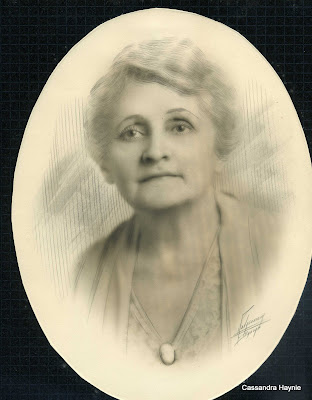
Description of Granny

On May 5, 2007, I wrote to Gloria, Dad's first cousin, saying in part that when I had e-mailed Dad the previous year to ask what role Granny played in their family life, he said something to the effect that she just sat in her rocking chair, knitting. I felt sure that there was more to her than that. So I wrote that I was certainly interested in Granny's journal, as well as in any pictures that she might have.
Note that the vital statistics we have for Granny, Ava Lucerne Campbell Hill, from various sources, are: Born in Tuskegee, Alabama, October 3, 1858. A recent e-mail from Dad says that he believes Granny rode the Texas & Pacific RR to the end of the line, which was the "tent city" of Abilene, in 1881 to visit her brother and met her future husband. Married David Graham Hill in Tuskegee, December 12, 1884, and then the couple departed for Abilene, Texas.
Granny became a widow when she was about 70. Dad has confirmed that she lived for a while in Memphis, being sort of a substitute mother for two of Dad & Gloria's cousins (Florence and Hank), as our great Uncle Henry Hill had become a single parent. Then, when Dad was between 8 and 12, Granny returned to Abilene and lived with the Haynies for the rest of her life, or approximately ten to fifteen years. She died August 7, 1949, at age 90.
Here is a transcription of Gloria's reply, dated July 13, 2007:
Dear Sandi,
I'm sorry to take so long to answer your nice letter. I have been very busy and I can't say exactly why. If time flies I certainly don't and that is one problem. I can't tell you how many times I have started and mentally composed a letter to you about Granny, but I never completed my thoughts well enough to present them to you.
I did not know Granny like Hi did because we always lived in another city and saw her only on visits to Abilene. She was pretty in the face with sparkling brown eyes, that run in the Hill-Campbell family. My daughter Judy and son George luckily have those big soft brown eyes like my Daddy, your [great] Uncle Dege (short for D.G.). Granny laughed a lot when I saw her and had a nice soft tinkley kind of laugh. She was gentle but I feel she had a very strong personality. From her memories she was a bit mischievous when she was young. She was raised in a strict Baptist family. She did not like the restrictions imposed by the Baptist religion. For instance she loved to dance (so do I, still), when she went to Abilene to visit her brother who went there after the war and opened a Bank like his father, Grandfather Campbell (G.W.) had the first registered Bank in Alabama. There she met Grandfather Hill who was raised on a large homesteaded ranch in Texas and educated in Galveston.
Granny came to N.O. when all the family lived in the Pontalba Bldg. in the Fr. Quarter. She did not stay long. The dampness was bad for her arthritis. She had come to stay with Auntie Mace and Uncle Roy McCullough, your great aunt, the twins' mother. I'm sure Granny was very spunky and brave for a young woman raised in a very protected home with a loving mother, and slave servants watching over her. When she was very old and airplanes were first beginning to fly Granny flew to New York and visited the McCulloughs up there. She had six children without much help as Abilene was such a new, small town at the time. Her father, went out to visit her and took a black maid, former slave, to work for her and help with the children and Granny sent her back to Tuskegee as she said she was more trouble than she was worth.
Granny went back to Tuskegee for the birth of her first three children and went through N.O. staying at the old St. Charles Hotel. Daddy remembered going with her.
Much love. I've run out of space -
Gloria
Granny went to college, stayed in dormitory there -
Subscribe to:
Posts (Atom)